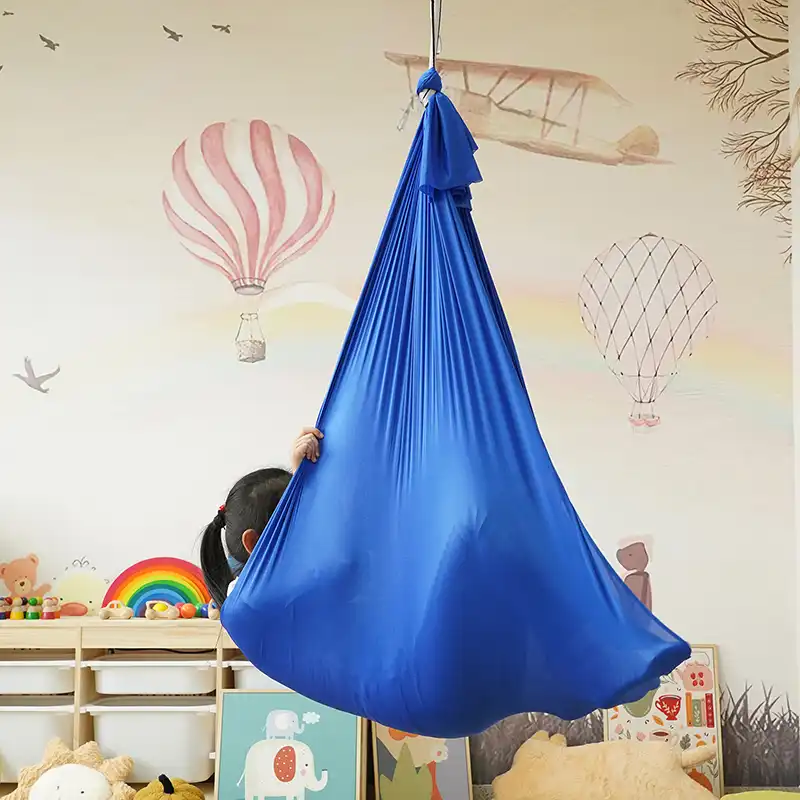
A sensory swing is designed to support vestibular input, core balance, and calming sensory regulation through linear swinging, gentle rotation, or cocoon-like deep pressure. Unlike standard playground swings, sensory swings come in diverse configurations—including pod swings, therapy hammocks, platform swings, nest swings, and multi-directional swivel setups.
For institutional buyers, schools, and distributors, selecting the right swing requires checking four practical factors:
- Intended application: Will it hang in an indoor sensory room, a classroom corner, or an outdoor playground?
- Structural load capacity: Does the ceiling joist, steel frame, or tree branch safely support both the static weight of the user and the dynamic force of movement (recommended minimum dynamic load factor: 3x to 5x user weight)?
- Motion and clearance zone: Does the layout provide a minimum 360-degree clearance of 6 to 8 feet without hitting walls, posts, or furniture?
- Hardware and material integrity: Are the carabiners, swivel rotational hooks, webbing straps, and fabrics commercial-grade, wear-tested, and easy to clean?
1. Main Types of Sensory Swings and Their Functions
Different swing designs provide different types of physical and neurological input. Matching the swing type to your target users prevents misuse and ensures durable performance across home, clinical, and institutional settings.
Pod and Cocoon Swings
Structure and materials: Made from cotton canvas, Oxford fabric, or double-layer Lycra with a removable inflatable or high-density foam cushion base.
Sensory benefits: Provides deep touch pressure and a private, enclosed environment. The enclosed sides help children feel safe, reduce visual and auditory distractions, and encourage self-regulation.
Best settings: Indoor sensory rooms, school calm-down corners, bedrooms, and daycare reading nooks.
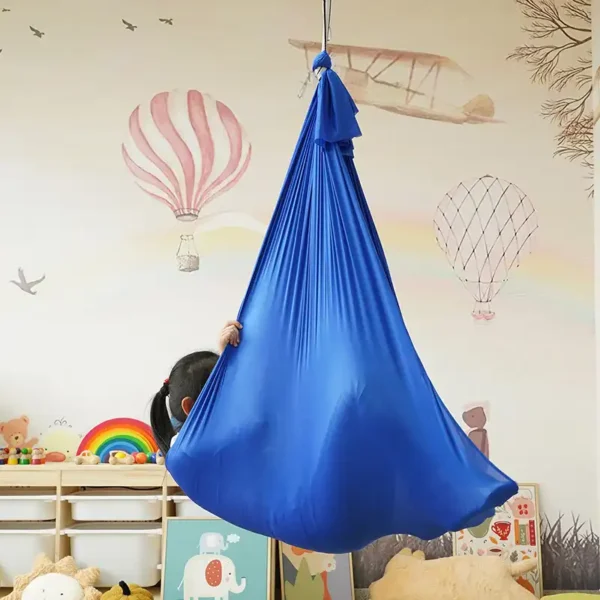
Wrap and Compression Swings
Structure and materials: Constructed from single or double-layer four-way stretch nylon fabric suspended from a single overhead anchor point.
Sensory benefits: Swaddles the body completely, delivering continuous deep compression as the child moves. It supports linear rocking, twisting, and upside-down hanging to stimulate vestibular and proprioceptive systems.
Best settings: Occupational therapy clinics, adaptive physical education rooms, and home sensory spaces.
Platform Swings
Structure and materials: Features a flat, rigid wooden or padded steel frame base suspended by four adjustable ropes.
Sensory benefits: Accommodates a wide variety of positions, including lying on the stomach (prone), sitting cross-legged, or standing. It is widely used to develop core strength, posture control, and gravitational balance.
Best settings: Pediatric therapy clinics, rehabilitation centers, and specialized sensory integration facilities.
Nest and Saucer Swings
Structure and materials: Built with a round steel tube frame wrapped in foam padding and fitted with a braided PE rope web or water-resistant 900D Oxford fabric seat.
Sensory benefits: Offers a spacious, open platform that supports multi-child cooperative play, gentle swaying, or active spinning without restrictive walls.
Best settings: Outdoor school playgrounds, inclusive public parks, backyard playsets, and residential outdoor spaces.
Bolster Swings
Structure and materials: Consists of a thick cylindrical foam log covered in heavy-duty, wipe-clean PU leather and hung from two overhead suspension ropes.
Sensory benefits: Requires the child to straddle the bolster, actively engaging abdominal muscles, hip stability, and grip strength to maintain balance while swinging.
Best settings: Clinical sensory integration rooms and pediatric physical therapy practices.
2. Choosing Between Indoor and Outdoor Sensory Swings
A common mistake in procurement is installing an indoor fabric swing outdoors or placing an oversized outdoor saucer swing in a tight indoor room without proper clearance.
Indoor Sensory Swings
- Focus: Controlled vestibular input, calming cocooning, and quiet sensory retreat.
- Materials: Breathable double-layer Lycra, cotton-blend canvas, and soft padded vinyl.
- Key consideration: Ceiling attachment points must be anchored into solid structural wood beams or concrete ceiling slabs—never into hollow drywall or dropped ceiling grids.
Outdoor Sensory Swings
- Focus: High-traffic use, multi-directional motion, and weather resistance.
- Materials: UV-stabilized PE rope, powder-coated heavy-gauge steel tubing, and weather-treated Oxford fabric with drainage grommets.
- Key consideration: Metal swing frames need certified ground anchoring, anti-rust coatings, and wide clearance away from fences, walls, and hard pavement.
3. Critical Safety Checks: Hardware, Anchors, and Load Ratings
Safety in sensory swings comes down to the weakest link in the hanging assembly. When purchasing for institutional or retail distribution, inspect every hardware component thoroughly.
Dynamic Load vs. Static Load
A child weighing 70 lbs (32 kg) creates significantly higher dynamic force when swinging or spinning vigorously.
- Static load test: Confirms the swing holds dead weight without tearing or structural failure.
- Dynamic load test: Accounts for centrifugal force, sudden drops, and side-to-side jerks during active play.
- Standard rule: Hardware (swivels, carabiners, mounting plates) should carry a rated working load limit (WLL) of at least 300 to 500 lbs (135–225 kg) for residential use, and 800+ lbs (360+ kg) for commercial or multi-user installations.
Essential Hardware Checklist
- 360-Degree Swivel Hook: Essential for rotational sensory swings. Without a smooth ball-bearing swivel, suspension ropes and fabric will twist, bind, and fray rapidly under rotational stress.
- Locking Carabiners: Use heavy-duty, screw-lock or auto-locking steel carabiners rather than lightweight spring clips.
- Heavy-Duty Ceiling / Beam Mounts: Welded steel plates with multi-bolt patterns distributed across joists.
- Adjustable Multi-Loop Daisy Chains / Tree Straps: High-tensile polyester webbing with reinforced bar-tack stitching allows easy height adjustment without tying knots (which weaken rope tensile strength by up to 50%).
4. Installation and Clearance Requirements
Improper spacing causes the majority of swing-related accidents. Follow these physical installation benchmarks:
- Ground Clearance: The bottom of the swing should hang 12 to 18 inches (30–45 cm) above the floor or ground surface when weighted. This allows children to get in and out independently while preventing hard impact.
- Perimeter Clearance (Use Zone): Maintain at least 6 to 8 feet (1.8–2.4 m) of open, obstacle-free space in all directions around the swing. Remove sharp-edged tables, toy bins, and structural columns from the swing radius.
- Protective Surfacing: Always place shock-absorbing floor mats (at least 2-inch thickness) beneath indoor swings. For outdoor frames, maintain approved impact surfacing such as engineered wood fiber, rubber mulch, or poured-in-place rubber.
5. What B2B Buyers Should Look for in a Manufacturing Partner
If you are sourcing sensory swings for a private-label brand, educational catalog, or healthcare equipment supply business, off-the-shelf wholesale items often lack batch testing records, consistent stitching quality, or customized packaging.
Here is what an experienced manufacturing partner should provide:
In-House Multi-Material Manufacturing
Sensory swings integrate textiles (Lycra, canvas, mesh), metal hardware (steel rings, swivels, frames), and plastics/foam (molded seats, padding). Working with an integrated manufacturer ensures tight quality control across all three material groups without intermediary markups.