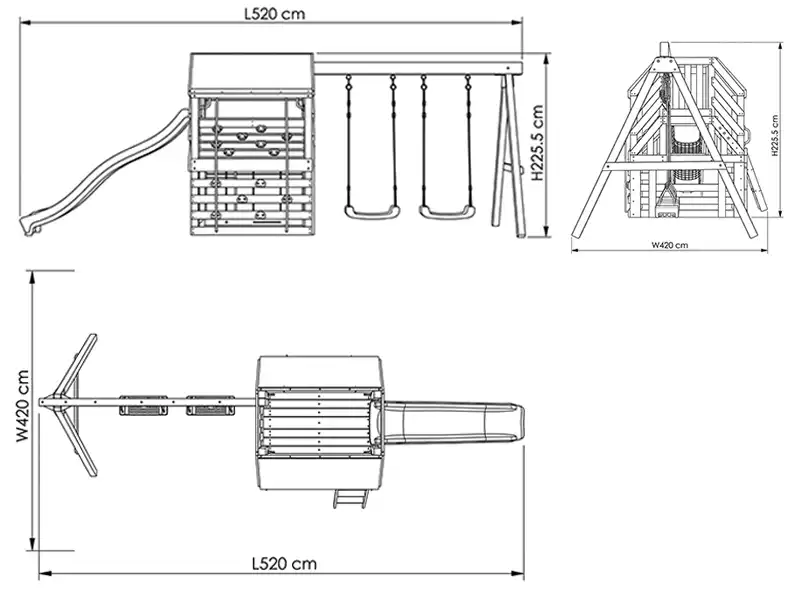
When choosing an outdoor wooden playground set manufacturer, it is not about comparing prices. Because different products vary in quality, configuration, accessories, and other aspects, price cannot represent everything. Some suppliers may have exquisite product pictures and videos, but fail to provide the production control, documentation, testing experience, or project support required for the project.
For schools, distributors, developers, retailers, and private labels, the more critical question is: Can this manufacturer provide the right equipment for your market and project, and do they have comprehensive documentation and quality control?
This guide will explain what to inspect before requesting a quote, how to compare different manufacturers, and which questions can reveal the difference between a true manufacturing partner and a company that merely resells products.
Start with the Project, Not the Product Catalog
Before contacting a manufacturer, write down the basic requirements of your project:
– Who will use the equipment?
– Where will the equipment be installed?
– Is the project targeted at schools, parks, childcare institutions, communities, retailers, or residential users?
– What age group does the equipment need to serve?
– What products are needed: play towers, swings, slides, climbing frames, or accessories?
– What are the site dimensions and use zone requirements?
– Which market or country will the equipment be exported to?
– Do you need standard products, modified designs, or fully customized OEM/ODM solutions?
These details affect design, materials, installation methods, documentation, packaging, and compliance requirements. Manufacturers should ask for this information before recommending products.
1. Confirm Whether the Supplier is a True Manufacturer
A true manufacturer should be able to explain its product manufacturing process and provide evidence of the production workflow. You might ask, can some trading companies provide this as well? However, they cannot understand design changes, the product generation process, and product quality issues as thoroughly as experienced factory manufacturers. Their capability to control replacement parts is also likely to be weaker.
Also ask for the following information:
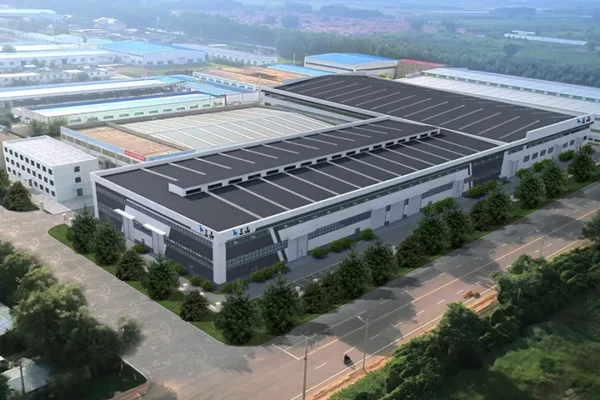
– Factory location and production area
– Woodworking, metalworking, and plastic processing capabilities
– Cutting, welding, forming, coating, and assembly processes
– Quality control check-points
– Product development and CAD support
– Sample making and approval process
– Packaging and export operations
PAFIC PLAY was established in 1997 and owns a 50,000-square-meter production base in Qingdao, China. Its production model covers the integrated manufacturing of wood, metal, and plastics, enabling the company to manage multiple core processes within a single production base without having to coordinate every component through unrelated suppliers.
When a project includes wooden towers, metal swing beams, plastic slides, and branded accessories, this structure is crucial. Reducing handover links makes it easier to track changes and resolve quality issues.
2. Match the Manufacturer’s Product Range with Your Project
Some manufacturers may list many products, but the key is whether their experience aligns with your requirements.
For example, playground equipment suppliers may specialize in:
– Wooden play structures and playhouses
– Swing sets and A-frame structures
– Slides and slide towers
– Climbing walls and climbing frames
– Nest, saucer, platform, and pod swings
– Bucket and belt swings
– Playground accessories and hardware
– Combination products for private labels or project customization
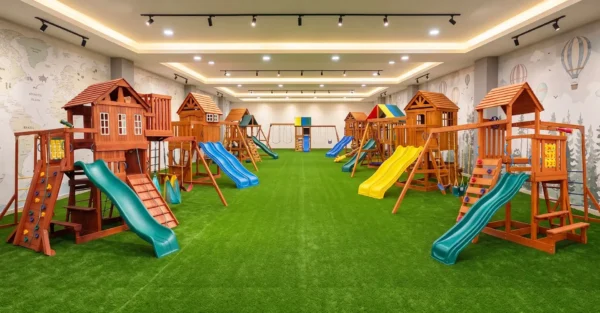
PAFIC PLAY’s product portfolio includes wooden play structures, swings, slides, climbing frames, and playground accessories. Its product introduction also features premium wooden play towers with integrated slides, ladders, and climbing walls, and offers customization options for color, size, layout, and accessories.
Do not assume that a supplier can manufacture all products appearing in the product catalog. Always ask which products are manufactured in-house, which components are purchased, and which products can be customized according to your market.
3. Review the Design and Customization Process
OEM and ODM projects require more than just product pictures with a new logo. They require a clear process to transform concepts into final approved products.
A reliable manufacturer should be able to explain:
– How initial concepts or drawings are reviewed
– Whether CAD drawings are provided
– How dimensions and materials are confirmed
– How prototypes or samples are made
– Who approves design changes
– How safety-related changes are recorded
– How packaging and branding are adjusted
– How approved samples are controlled during mass production
PAFIC PLAY describes three cooperation models:
– OEM: Production based on customer drawings and specifications
– ODM: Product development around customer concepts and market demands
– OBM: Provision of finished branded products with customer labels, packaging, and retail support
The appropriate model depends on how much design work your team wants to undertake. Retailers with mature product specifications may need OEM production. Distributors seeking new product lines can benefit from ODM support. Brands launching complete series may require ODM support. Playground facility projects may need a combination of multiple services such as design, packaging, and manufacturing.
4. Request Documentation Truly Needed by Buyers
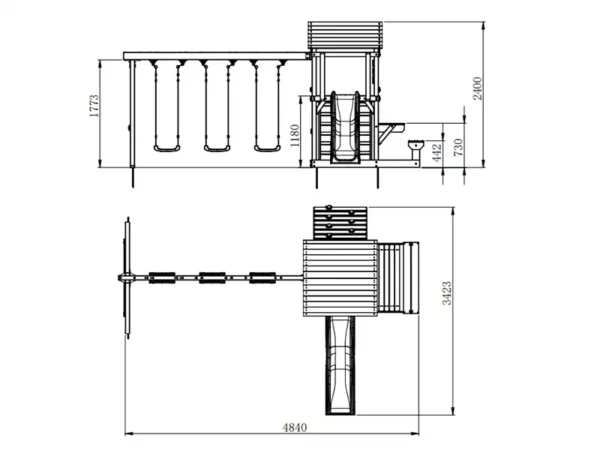
Product photos are useful in the early stages of negotiation, but they are not sufficient as a basis for project approval. Before placing an order, ask what technical documents the supplier can provide.
Depending on the product and target market, these documents may include:
– Product specifications
– Dimension and layout drawings
– Installation instructions
– Maintenance instructions
– Material information
– Hardware specifications
– Packaging details
– Quality inspection records
– Test reports and certificates (if applicable)
– Spare parts information
Documents should clearly indicate the products or product series they cover. Never treat generic company certificates as proof that every product complies with various market requirements.
PAFIC PLAY’s company profile lists its management, audit, and product safety certifications, including ISO 9001, BSCI, Sedex, ASTM F963, EN 71, and AS/NZS 8124. Nonetheless, buyers should still request corresponding certificates or test documents for specific products and target markets.
5. Inspect the Production Process and Quality Control
Ask how quality inspections are conducted at various stages, rather than only after the product is completed.
For mixed-material playground projects, critical inspection points may include:
– Incoming material inspection
– Wood selection and treatment
– CNC cutting accuracy
– Welding quality and dimension check
– Plastic component inspection
– Powder coating finish
– Hardware and fastener inspection
– Assembly verification
– Final inspection before packaging
PAFIC PLAY’s production capabilities cover processes such as CNC laser cutting, fiber laser welding, robotic welding, blow molding, injection molding, and electrostatic powder coating. These processes should be combined with actual inspection procedures. When evaluating a supplier, inquire about specific testing indicators, how non-conforming products are handled, and how the final product is verified against approved samples.
6. Compare Materials, Finishes, and Maintenance Requirements
Outdoor equipment is subject to rain, ultraviolet rays, temperature variations, dirt, and heavy use. If the quality of finishes, hardware, or replacement parts supply is poor, a low initial price does not necessarily mean a low total cost.
Ask the manufacturer the following questions:
– What types of wood or metal are used?
– What treatments have the materials undergone for outdoor use?
– What coatings or surface finishes are applied?
– Which components are most prone to wear and tear?
– How often should fasteners and connection points be inspected?
– Can replacement parts be ordered later?
– What maintenance instructions are provided?
For wooden play structures, inquire clearly about wood treatment, surface finishes, moisture-proof measures, cracking inspection, cleaning, and routine inspections. For metal structures, inquire about anti-corrosion measures, welding conditions, coating thickness or finish requirements, and hardware conditions. For plastic slides and accessories, inquire about material specifications, color stability, impact resistance, and related replacement options.
7. Evaluate Production Capacity and Delivery Control Capabilities
Some suppliers may be able to produce individual samples, but struggle to cope with large-scale, repetitive orders. Ask how the manufacturer manages production capacity during peak seasons and how production dates are determined.
Issues worth paying attention to include:
– What is the regular process from sample approval to mass production?
– Which components have the greatest impact on lead time?
– How are changes managed after design approval?
– How are export products packaged?
– Can the supplier provide loading or container planning information?
– How are delivery delays communicated?
PAFIC PLAY describes a six-stage process ranging from design and R&D to cutting, welding, and forming.
The best outdoor playground equipment manufacturer is not necessarily the supplier with the most extensive product catalog or the lowest initial quote. You should look for a partner who can clearly articulate the production process, provide detailed product documentation, support target market demands, and take charge throughout the entire process—from initial design drawings to final shipment delivery.
To carry out an OEM or ODM project, you can provide us with a project brief detailing product requirements, target market, order quantity, design preferences, packaging needs, and delivery destination. This will provide manufacturers with the necessary information to formulate more valuable proposal solutions and provide accurate quotes for you.