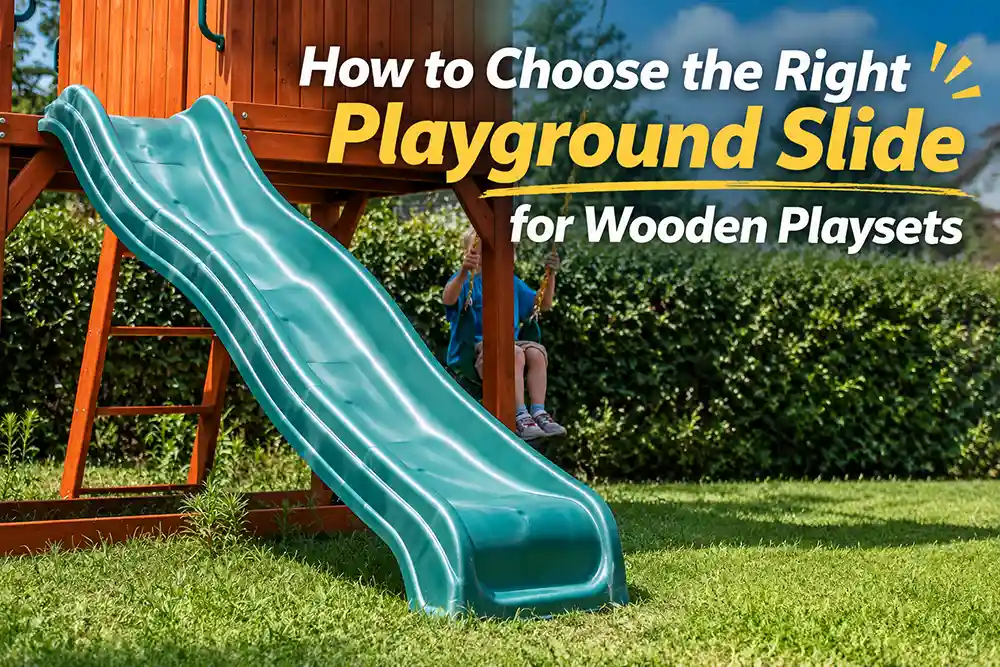
When designing or sourcing a childrens outdoor slide for wooden play equipment, many brands and procurement teams focus heavily on timber selection and structural styles, treating the slide as a mere “add-on plastic accessory.” Most buyers assume that once the wood is right, the job is done. In reality, purchasing wooden play structures involves much more than timber specifications alone.
A playground slide might look like a simple plastic component, but it is often the part of the entire play set that presents the most safety hazards and requires the strictest assembly tolerances. If the slide is chosen incorrectly, children may experience excessive downward momentum or get stuck midway, directly compromising play safety.
Drawing on nearly 30 years of experience in manufacturing and exporting wooden play equipment, we break down the critical details of selecting the right slide across three key dimensions: platform height matching, mounting structure interfaces, and export packaging/container loading.
A slide may look like a great fit for your backyard layout on paper, but actual installation on your playset can tell a different story. The mounting flange may not align flush with the wooden deck, the run-out section at the exit might exceed your site layout boundaries, or the slide’s packaging volume could drastically alter how the entire set is shipped.
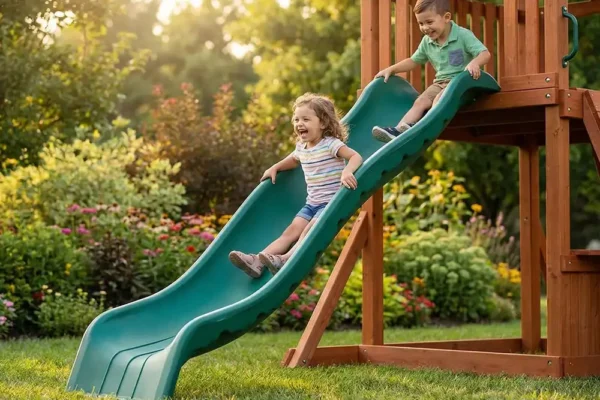
Start with Platform Height and Mounting Interfaces for Your Slide Playground
When purchasing play equipment, knowing the exact platform deck height is essential for your slide playground setup. You should request the deck height of the intended mounting position from your manufacturer, along with structural platform drawings. These drawings should clearly indicate the entryway opening, available mounting surface, pre-drilled holes, and adjacent railings or protective barriers. It is best to obtain a dedicated slide drawing from the manufacturer that explicitly specifies the target platform height, mounting points, total horizontal extension, and any required ground support brackets at the exit.
You cannot evaluate compatibility by slide length alone. Even if two slides have similar lengths listed in a product catalog, a straight slide and a wave slide occupy completely different ground footprints. You need to verify the overall assembled footprint, including the landing zone clearance and buffer space around adjacent play zones. If you are sourcing a replacement kids slide outdoor attachment for an existing structure, always confirm the specific platform model first.
Selecting the Right Shape and Material: From Playhouse with Slide to Tower Sets
Define the exact role of the slide within your overall product lineup. For a compact playhouse with slide designed for residential backyards, footprint efficiency is usually the top priority. For larger tower play structures, you will have more room to accommodate varied slide contours and longer run-outs.
When it comes to material specifications, you need to understand the exact environmental requirements of the product. For outdoor applications, high weather resistance and UV stabilization in the plastic slide are critical to prevent fading and brittle cracking under long-term sun exposure. Specific custom brand colorways and finish textures must also be evaluated and clarified with the factory well in advance.
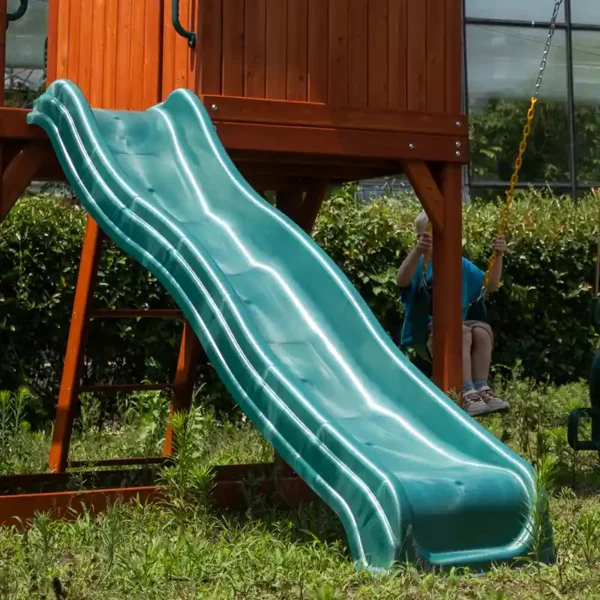
Always Conduct a Full Pre-Assembly Test for Every Childrens Slide
Before signing off on a production order, always have the factory mount the childrens slide onto the target platform and test it with all matching hardware and support brackets. Verify that all mounting anchor points align with the technical drawings, and check whether the assembly steps and hardware pack match the packing list in the box. This stage is also the right time to confirm that the selected surface texture and color match your quality standards.
For retail or wholesale programs, inspect the carton dimensions and internal protective packaging of the childrens outdoor slide, noting whether the slide ships inside the main playset carton or as a separate package. If your supplier recommends nested bulk stacking for bulk shipments, review their packaging layout carefully to confirm how all plastic contact surfaces are protected against scuffing.
Packaging Considerations for Export & E-commerce: Optimizing Plastic Slide Shipping
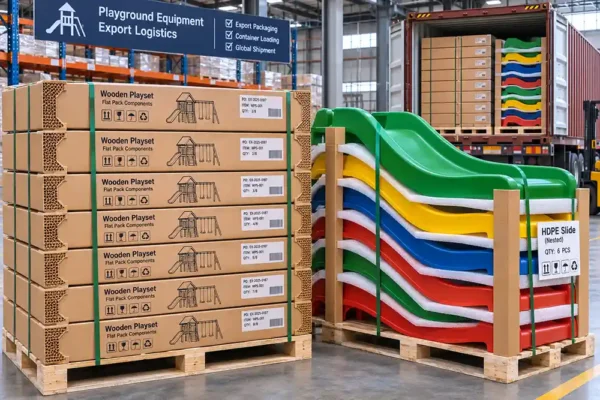
In B2B export trade, bulky slide components can easily turn into “freight killers.” If the slide design or packaging is inefficient, the loading capacity of a 40HQ container can drop sharply from 200 sets to just 110 sets, driving single-set ocean freight costs up by 30% to 50%.
If you choose a “boxed wooden components + nested single-piece slides” shipping method, the nested plastic slide units must be layered with EPE foam padding or heavy-duty kraft paper dividers. This prevents sea transit vibration from causing scuff marks, scratches, or stress whitening on the plastic surfaces.
If you opt for a sectional/modular slide, plan it to pack flat alongside the wooden hardware into 1 or 2 master cartons. Master cartons should use 5-ply or 7-ply reinforced corrugated cardboard (such as 250 lbs / ECT-44 bursting test standards) with honeycomb edge protectors around slide corners to prevent plastic bending or cracking during transit and handling.
Recommended Sourcing Checklist for Wooden Playsets
If you are preparing to place a custom OEM/ODM order for wooden play equipment with an integrated kids slide outdoor setup, we recommend following these steps:
- Fix platform height before choosing slide length: Avoid blindly chasing oversized slides. Match the slide strictly to the platform height to ensure the average slope angle complies with safety standards in your destination market.
- Conduct assembly tolerance tests during sampling: Focus on testing the seam alignment between the slide and the wooden platform, sectional joint smoothness, and structural deflection under screw fastening.
- Calculate total container loading efficiency: Ask your manufacturer for complete palletization and container loading simulation diagrams to accurately evaluate your landed cost per unit.
PAFIC PLAY can evaluate your existing slide drawings or provide engineering recommendations for new play equipment concepts. If you have custom slide or wooden playset development needs, feel free to contact us for professional OEM/ODM solutions.